No surprises at the dock with CargoON new features
Retail and FMCG distribution centers operate under constant pressure. Every day, they handle hundreds of trucks, which requires precise coordination of warehouse operations and seamless collaboration between suppliers, forwarders, and carriers.
Yet despite the scale and complexity of modern supply chains, many operations are still managed in a fragmented way – through emails, phone calls, spreadsheets, or separate systems. The result? Operational chaos.
Exceptional Complexity of Transport Execution
Retail logistics operates under a unique combination of challenges:
- large operational scale
- strict delivery time windows
- high throughput requirements
- multi-level subcontracting chains
Transport rarely follows a simple shipper → carrier structure. Retailers outsource transport to forwarders, who often subcontract further down the chain. Visibility into who actually performs the delivery quickly disappears.
At the same time, orders are rarely executed in a simple 1 order = 1 truck model. Multiple deliveries often arrive at the warehouse simultaneously, and they are additionally consolidated across different suppliers and carriers. Without proper process structuring, this complexity leads to operational instability.
Three Operational Problems DCs Know Too Well
1. Loss of Control in Subcontracting Chains
Retail transport is often outsourced. Logistic operators assign deliveries to freight forwarders, who pass them on to carriers – and those may subcontract them further. The consequences are well known:
- missing vehicle or driver data before arrival for unloading
- additional security checks slowing down warehouse operations
- unclear accountability for delays
- limited visibility into who is actually performing the transport
In some cases, up to 40% of truck announcements arrive without complete vehicle information, creating delays even before the truck enters the facility.
2. Fragmented Deliveries and Dock Congestion
Retail logistics rarely operates within simple, predictable structures. Multiple purchase orders may be transported in a single vehicle, yet warehouse teams often lack full visibility into the actual contents of the delivery before it arrives.
This creates a chain reaction:
- warehouse crews are unprepared
- labor planning becomes inaccurate
- docks become blocked
- daily schedules start slipping
When trucks arrive without clear load visibility, warehouse throughput drops and booking capacity becomes artificially constrained.
3. Administrative Chaos
Many transport operations are still coordinated using:
- phone calls
- email threads
- Excel files
- manually rewritten vehicle and order data
This fragmented process leads to:
- communication chaos
- wasted time resolving simple issues
- limited scalability as operations grow
Instead of focusing on process optimization, teams spend their time dealing with day-to-day issues.
The Dock Is Where Planning Meets Reality
Transport planners may design the perfect delivery schedule. But the dock is where that plan is tested.
When information is missing, arrivals are unpredictable, and subcontracting is uncontrolled, the entire system becomes fragile.
- Trucks bunch up.
- Docks become congested.
- Warehouse operations slow down.
Bringing Order to the Chaos
CargoON Time-Slot Management was designed specifically for the realities of retail distribution. Instead of basic dock scheduling, it introduces capabilities built for large-scale retail environments:
1. Control over subcontracting chains
CargoON enables structured, permission-based forwarding of time slots across subcontracting chains. This allows distribution centers to know who actually performs the transport, even when multiple intermediaries are involved.
2. Structured consolidation of deliveries
In CargoON, up to 25 purchase orders can be linked to a single booking, ensuring warehouses know exactly what is arriving before the truck reaches the gate. This allows teams to prepare for unloading more effectively and, as a result, increase throughput and booking capacity with the same resources.
3. A single source of operational truth
Transport execution data is stored in a single system instead of being scattered across emails, spreadsheets, and phone calls. This enables teams to move from reactive firefighting to predictable execution – and better align operations with actual order volumes.
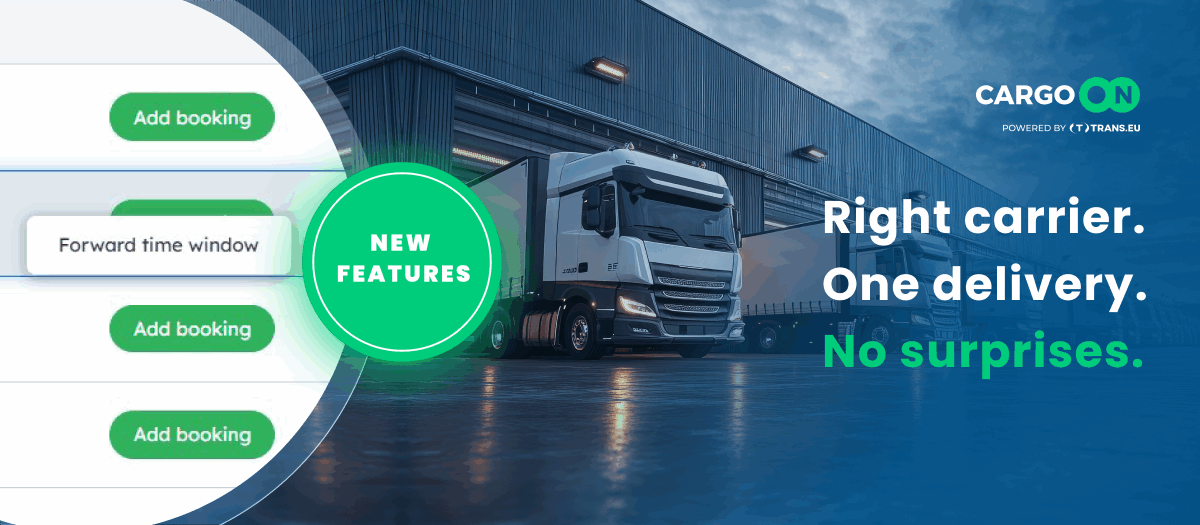
New features in the Time Slot Management module on the CargoON platform:
🚚 Time-slot forwarding – the carrier actually carrying out the delivery enters vehicle and driver data and manages bookings directly in the system.
📦 Order consolidation – warehouses see all orders transported by one truck in advance and can unload them at once.
The result?
✅ Clear accountability
✅ Faster unloading
✅ Lower transport costs
✅ Reduction of manual work
Retail logistics will always be complex but complexity does not have to mean chaos. When trucks, orders, and dock slots


